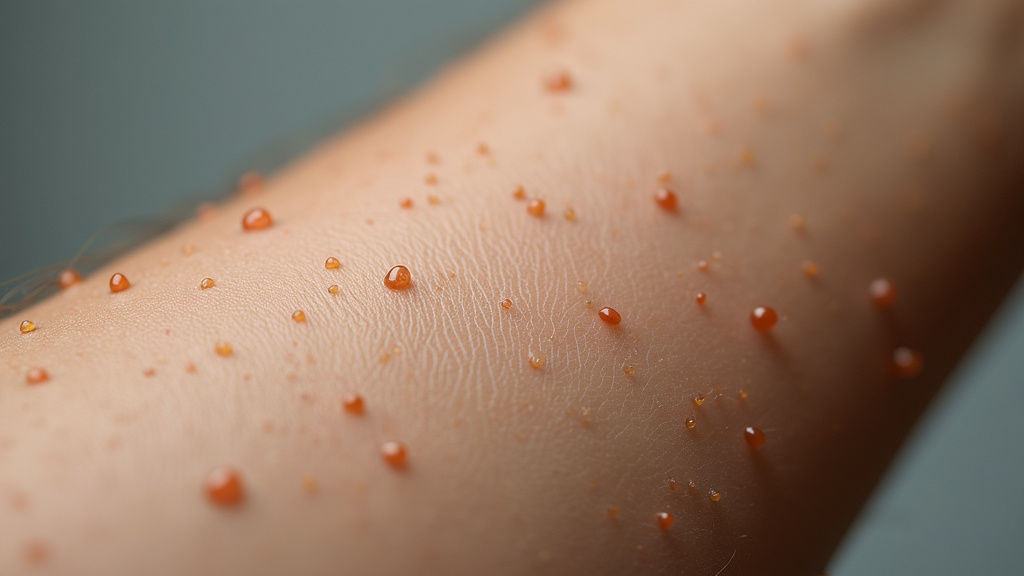
Tired of those rough little bumps dotting your skin? Although benign, keratosis pilaris affects almost 40% of the adult population. Good news: in this article, we present you with simple, effective solutions to reduce its effects and regain smoother, more comfortable skin.

Effective methods and products
Keratosis pilaris is a common skin condition, but there are ways toalleviate it with the right care. Here are a few simple, effective ways to improve the appearance of your skin:
- Gentle cleansing: Opt for a soap-free cleansing gel enriched with urea. It gently cleanses without aggressing the skin.
- Regular exfoliation: Gentle exfoliation once or twice a week helps remove dead skin cells. Be careful not to scrub too hard!
- Intensive moisturizing: Apply a daily moisturizing cream containing urea or salicylic acid. These ingredients help soften skin and unclog follicles.
- Specific products: Creams containing retinoids or vitamin A may be beneficial. Consult your dermatologist before use.
- Natural skin care: Coconut oil, aloe vera or olive oil can soothe and moisturize the skin. Test them on a small area before application.
Remember: patience is key. These methods require regular application to see results. If symptoms persist, don’t hesitate to consult a health professional.
Regular exfoliation
Regular exfoliation is your best ally against keratosis pilaris. It helps eliminate dead cells and reduce the build-up of keratin responsible for those unsightly bumps. Opt for a gentle exfoliation once or twice a week. No need to go too hard! A gentle massage is all it takes to unclog pores and soften skin.
You can choose between mechanical exfoliation, with soft particles, or chemical exfoliation, with mild acids such as AHA or BHA. The latter are particularly effective, as they dissolve dead cells without rubbing. Don’t forget to apply a moisturizer afterwards, such as a urea cream. It helps maintain hydration and soften the skin.
But be careful: your skin will be more sensitive after exfoliation. Remember to apply sun protection if you’re going out. And above all, be patient! Results won’t be immediate, but with regularity, you’ll see a clear improvement.
Daily moisturizing
Daily moisturizing is essential to reduce keratosis pilaris. It softens the skin and reduces the appearance of characteristic bumps. After your shower, generously apply an unscented moisturizing cream to the affected areas. Opt for products containing natural ingredients such as aloe vera, coconut oil or cocoa butter. These active ingredients provide deep nourishment and soothe irritation.
Don’t hesitate to vary the pleasures. In the evening, you can use a richer cream to take advantage of your skin’s nocturnal regeneration. If your skin is oily, opt for a light gel. For dry skin, a rich cream will work wonders. The important thing is to find the right product for your skin type and apply it regularly.
Think about internal hydration too. Drink enough water and eat water-rich foods such as cucumbers and watermelon. Your skin will thank you inside and out. With patience and consistency, you’ll gradually see your skin improve and regain its natural softness.
Acid and urea creams
Acid and urea creams are your allies in the fight against keratosis pilaris. They contain powerful ingredients such as salicylic acid, lactic acid and urea. These active ingredients work in synergy to improve the appearance of your skin.
Urea deeply moisturizes and helps eliminate dead skin cells. Salicylic acid gently exfoliates and unclogs pores. Lactic acid stimulates cell renewal. Together, they smooth roughness and soften skin.
Choose an unscented cream to avoid irritation. Apply it after a shower, when your skin is still damp. Be patient: you’ll see results with regular use. Ask your pharmacist for advice on the right product for your skin.
Natural remedies and home care
Nature is full of solutions to soothe keratosis pilaris. No need to run to the chemist – your kitchen can be a real ally!
Start with moisturizing. Coconut oil is a treasure for your skin. It penetrates deeply and softens rough areas. Apply it at night before going to bed, and you’ll notice the difference when you wake up.
Aloe vera is another miracle ingredient. Its gel soothes and moisturizes. You can apply it directly to the skin or mix it with your usual cream.
Looking for a homemade treatment? Try this simple mask:
- Mix plain yoghurt with a little honey
- Apply to affected areas for 15 minutes
- Rinse with lukewarm water
This blend moisturizes and soothes irritation.
Don’t forget gentle exfoliation. A scrub with sugar and olive oil, once a week, helps remove dead cells without aggressing the skin.
Finally, think inside out. A diet rich in omega-3 and vitamins A and C promotes healthy skin. Eat oily fish, nuts and plenty of colorful fruits and vegetables.
These natural remedies take time and patience. Use them regularly, and you should see improvements within a few weeks. If symptoms persist, don’t hesitate to consult a dermatologist.
Natural oils
Natural oils are real treasures for soothing keratosis pilaris. Coconut oil, for example, is an excellent choice. It deeply moisturizes and softens the skin, which can reduce the appearance of small bumps. Apply it at night before bedtime for optimum effect.
Castor oil is another interesting option. It has anti-inflammatory properties that can calm the redness associated with keratosis pilaris. Massage it gently into the affected areas once a day.
And don’t forget vitamin E-rich oils. They nourish the skin and promote regeneration. You can use them on their own or mix them with your usual moisturizing cream.
Remember to test a small area of skin before using a new oil. If you don’t see any improvement after a few weeks, don’t hesitate to try another oil or consult a dermatologist.
Oatmeal baths
Oatmeal baths are a real treasure for the skin. They soothe, moisturize and gently exfoliate. Here’s how to enjoy them:
Pour a cup of oatmeal into a washcloth or sock. Close tightly and plunge it into your hot bath. Leave to infuse for 5 minutes. The water will turn milky – that’s normal! Enjoy this moment of relaxation for at least 10 minutes.
Want to boost the effects? Add a few drops of lavender or chamomile essential oil. A little honey will also work wonders.
If you don’t have oats on hand, don’t panic! Try coconut or almond milk. They’re just as effective at moisturizing and soothing your skin.
Remember: always test on a small area before using a new product. Your skin will thank you!
Understanding keratosis pilaris
Keratosis pilaris is not a serious condition, but it can be a nuisance. It’s a common skin condition affecting many people. It manifests itself as small, rough pimples on the skin, often compared to “goose bumps”.
What exactly is going on? Your body produces too much keratin, a protein that protects the skin. This excess keratin clogs the hair follicles, forming those famous little pimples. These are often seen on the arms, thighs or buttocks.
Why does this happen? We don’t really know. But we think it might have something to do with your genes. If your parents had it, you’re more likely to have it too.
The good news is that keratosis pilaris is not dangerous. It can improve with age, but not always. The most annoying thing? It often worsens when the air is dry, as in winter.
Understanding this condition is the first step to better managing it. With the right care, you can improve the appearance of your skin and feel more comfortable.

